
Practical Playbook
for L&D & Corporate Trainers
Visual Frameworks, AI Workflows, and Real-World Plays for Modern L&D Professionals
Move beyond slide decks to measurable workplace capability.
Forthcoming · Target Release: December 2026
This book and its companion resources are currently in structured development for Version 1.0 (December 2026). Purchases and downloads are not available yet. When released, verified buyers will unlock the complete printable and editable toolkit bundle via a free hunarlab.com account.
December 2026 is the target release, not an on-sale date. Buyer verification and account access are planned release features.
LOOK INSIDE
Preview the Book
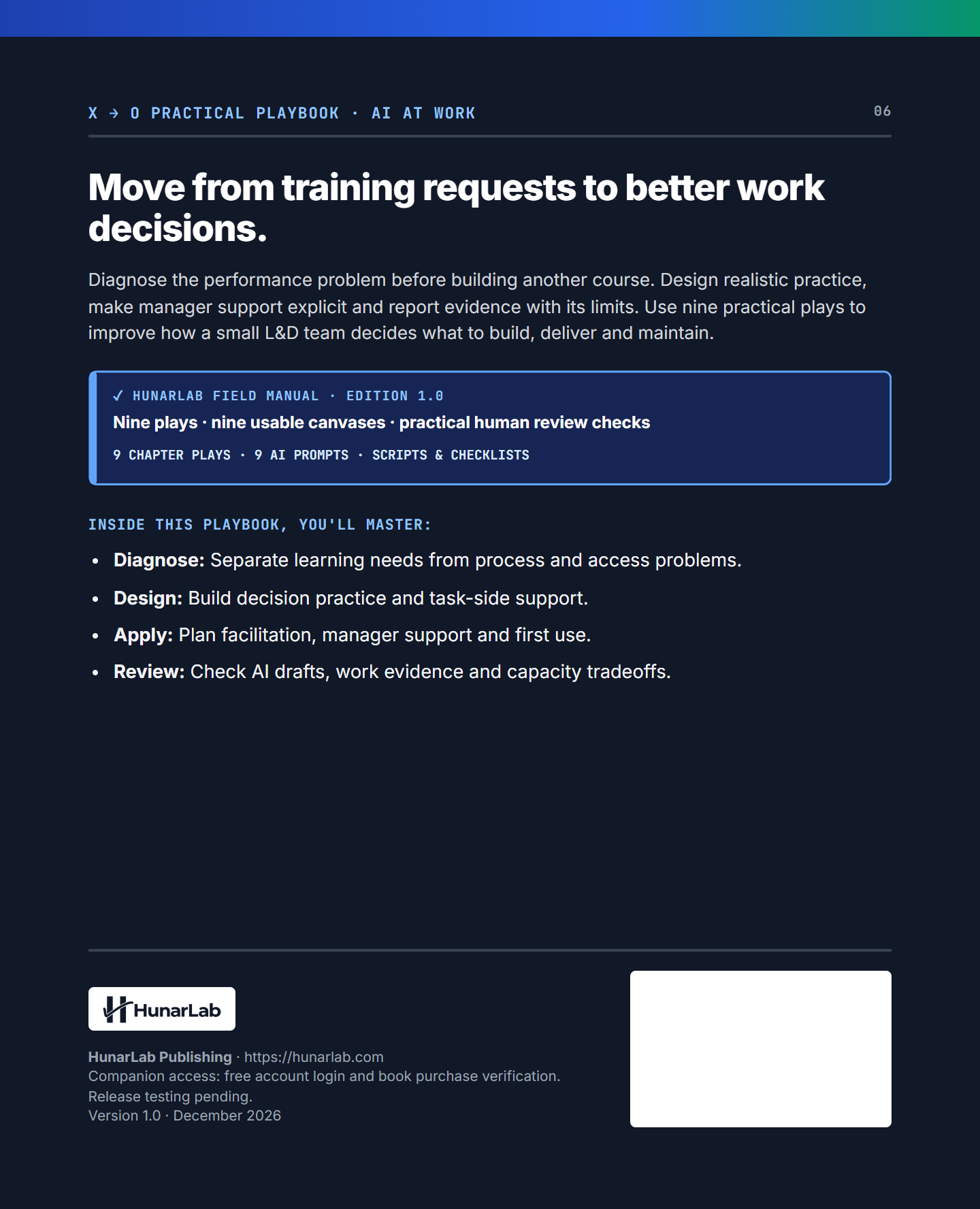
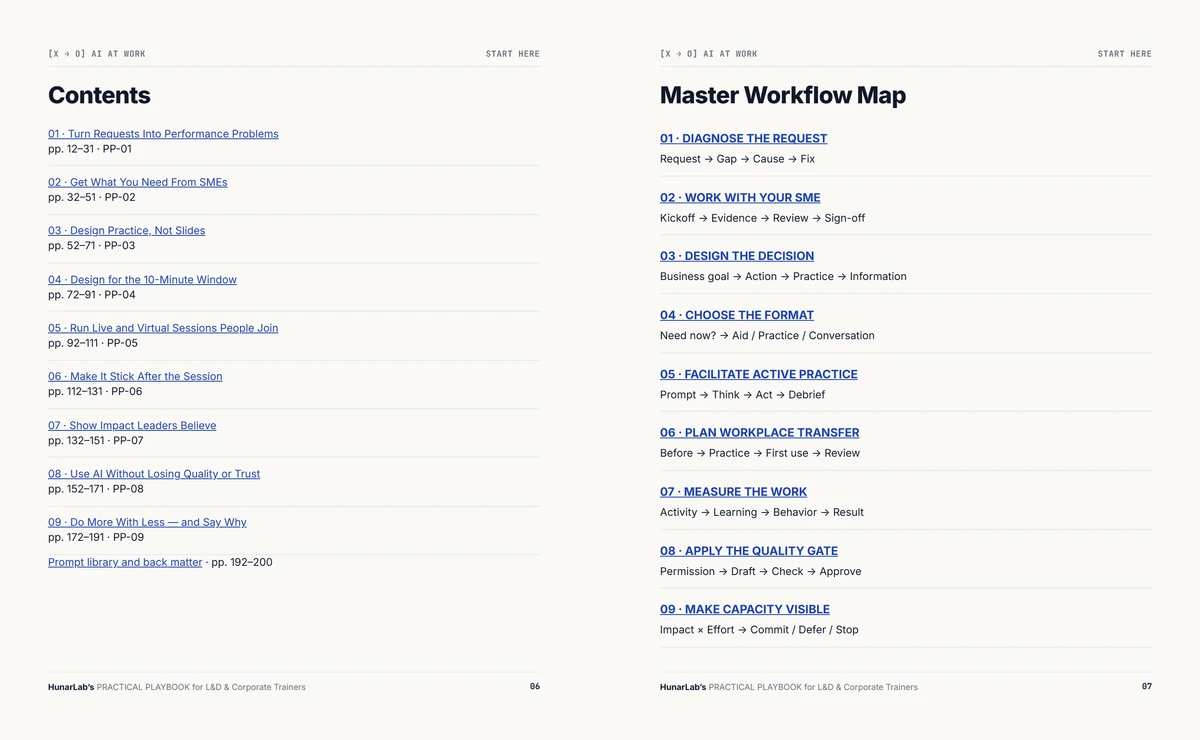
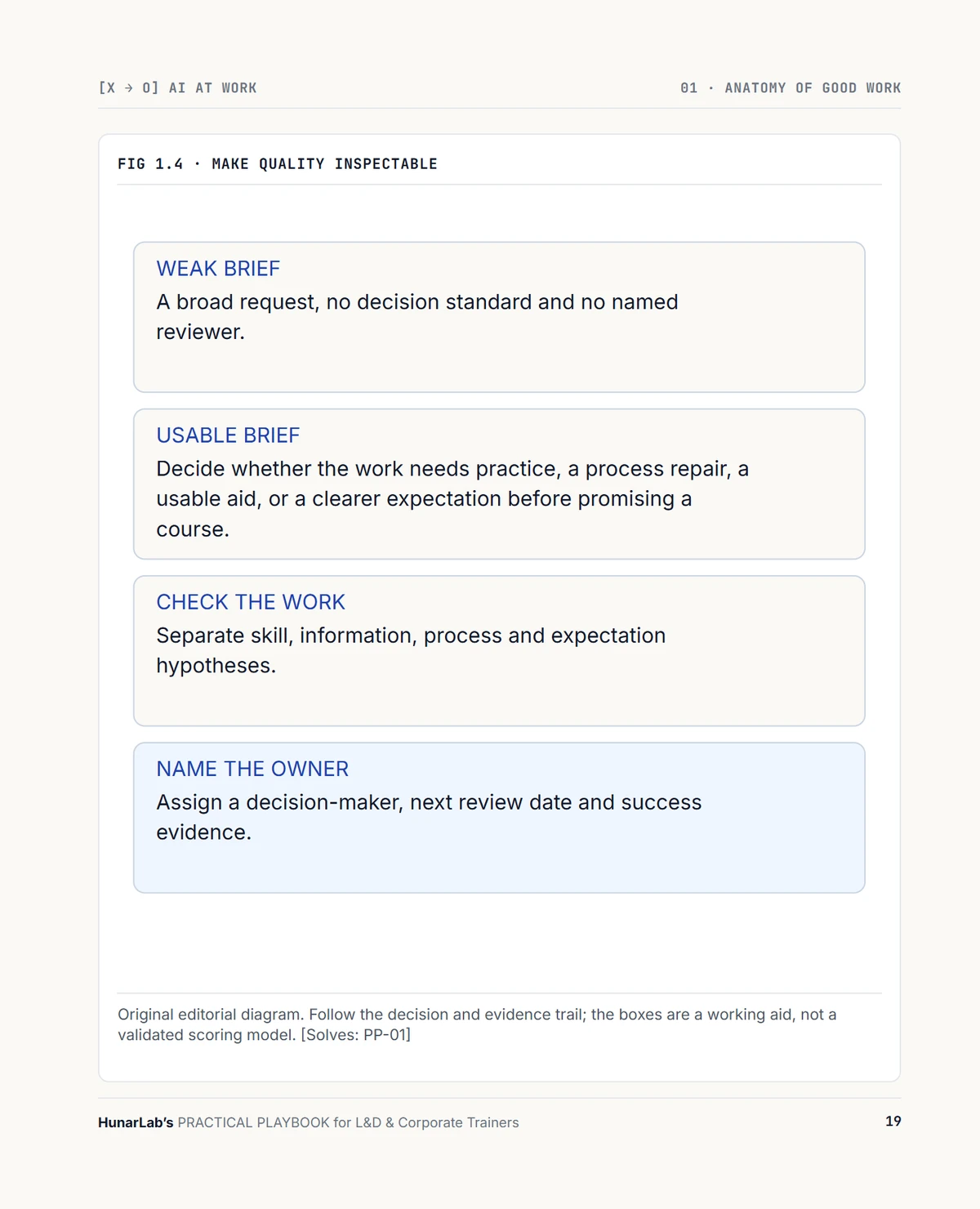
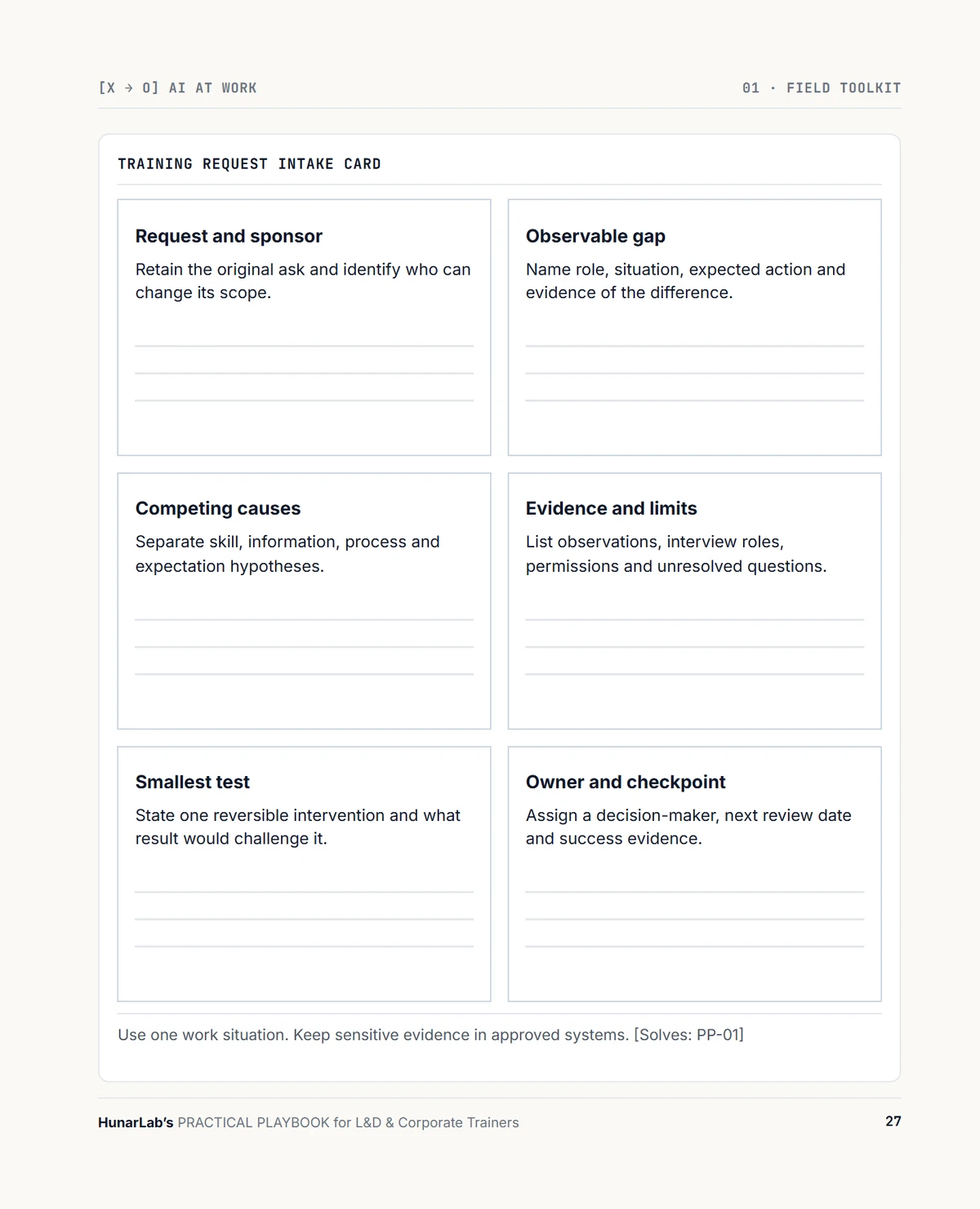
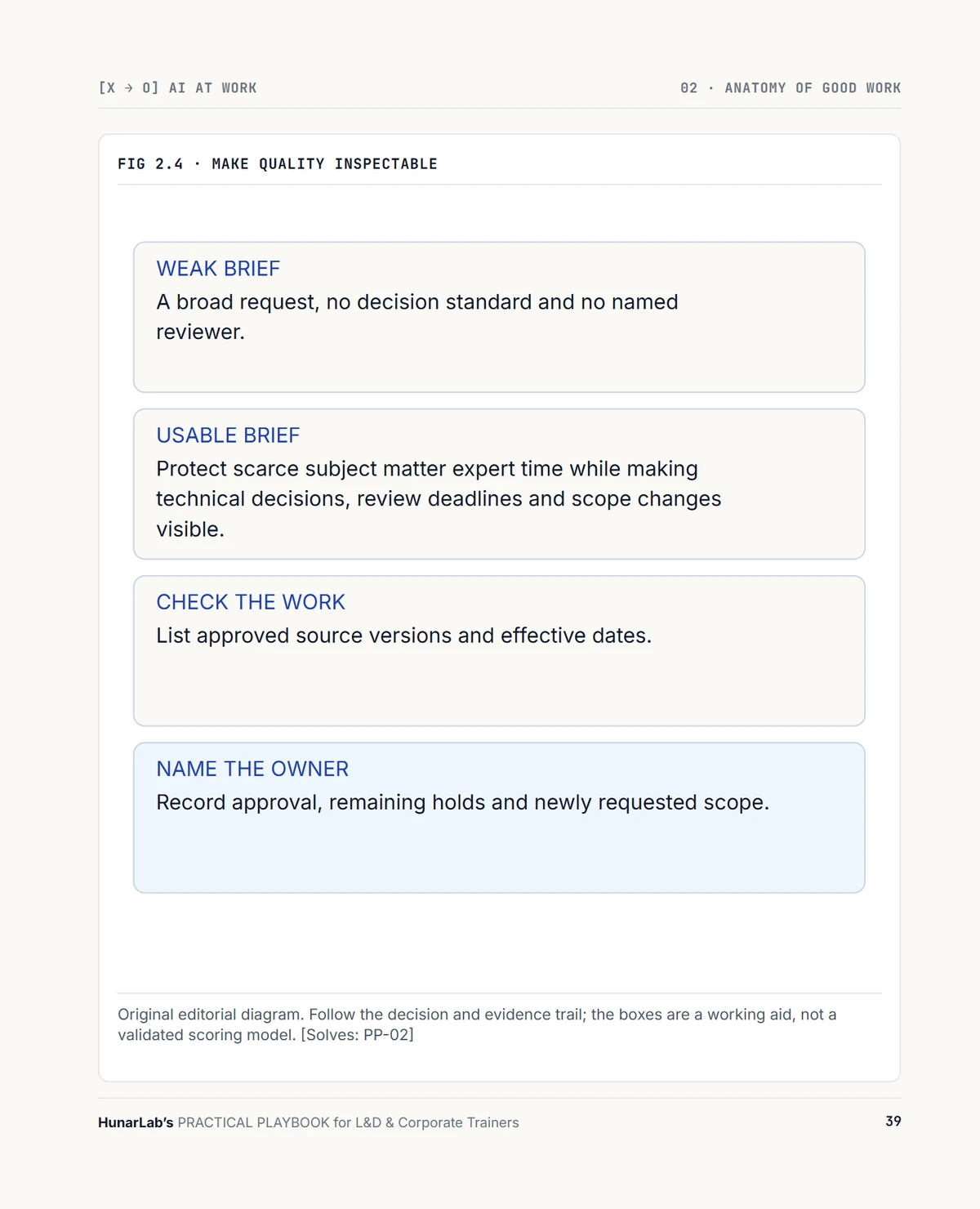
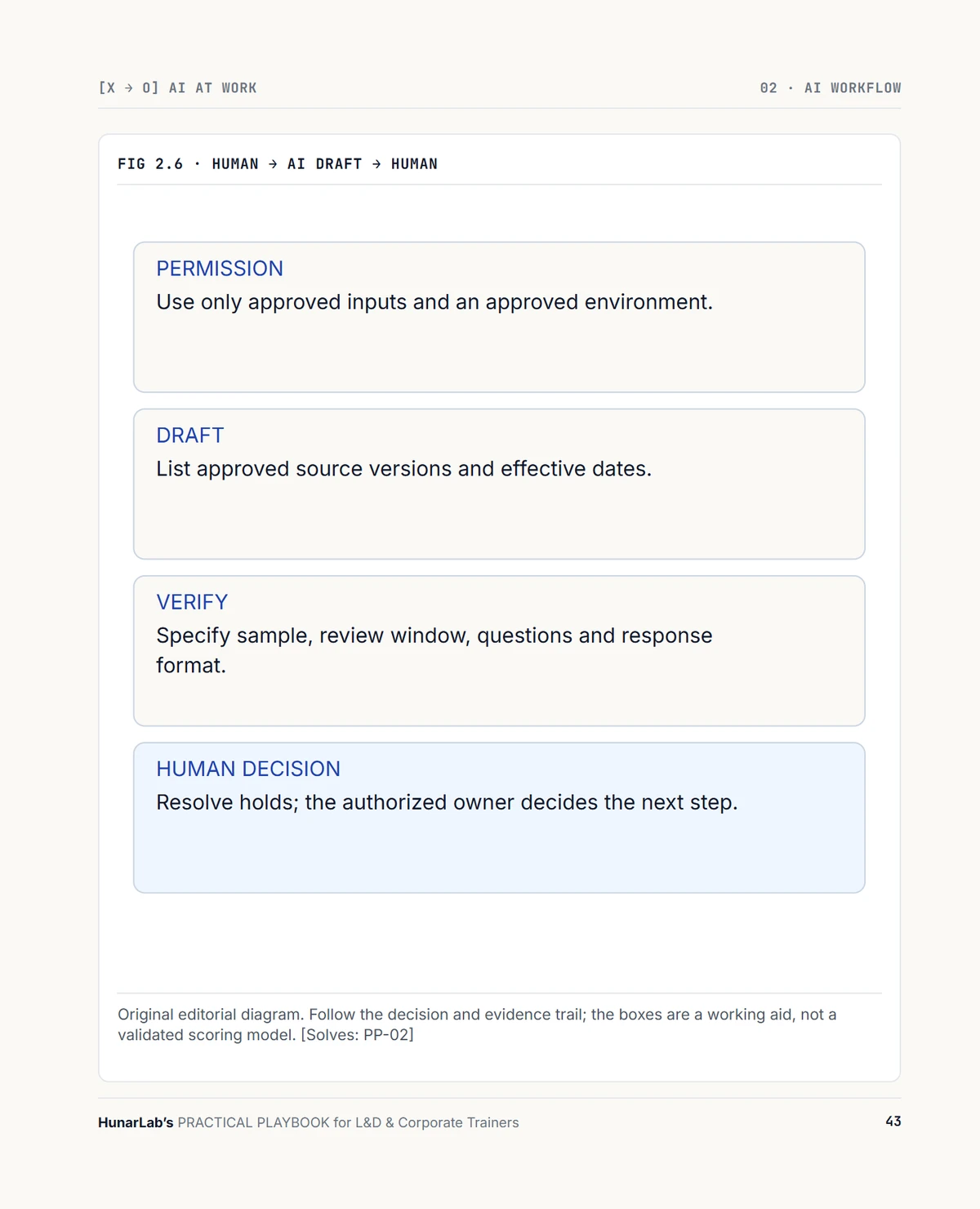
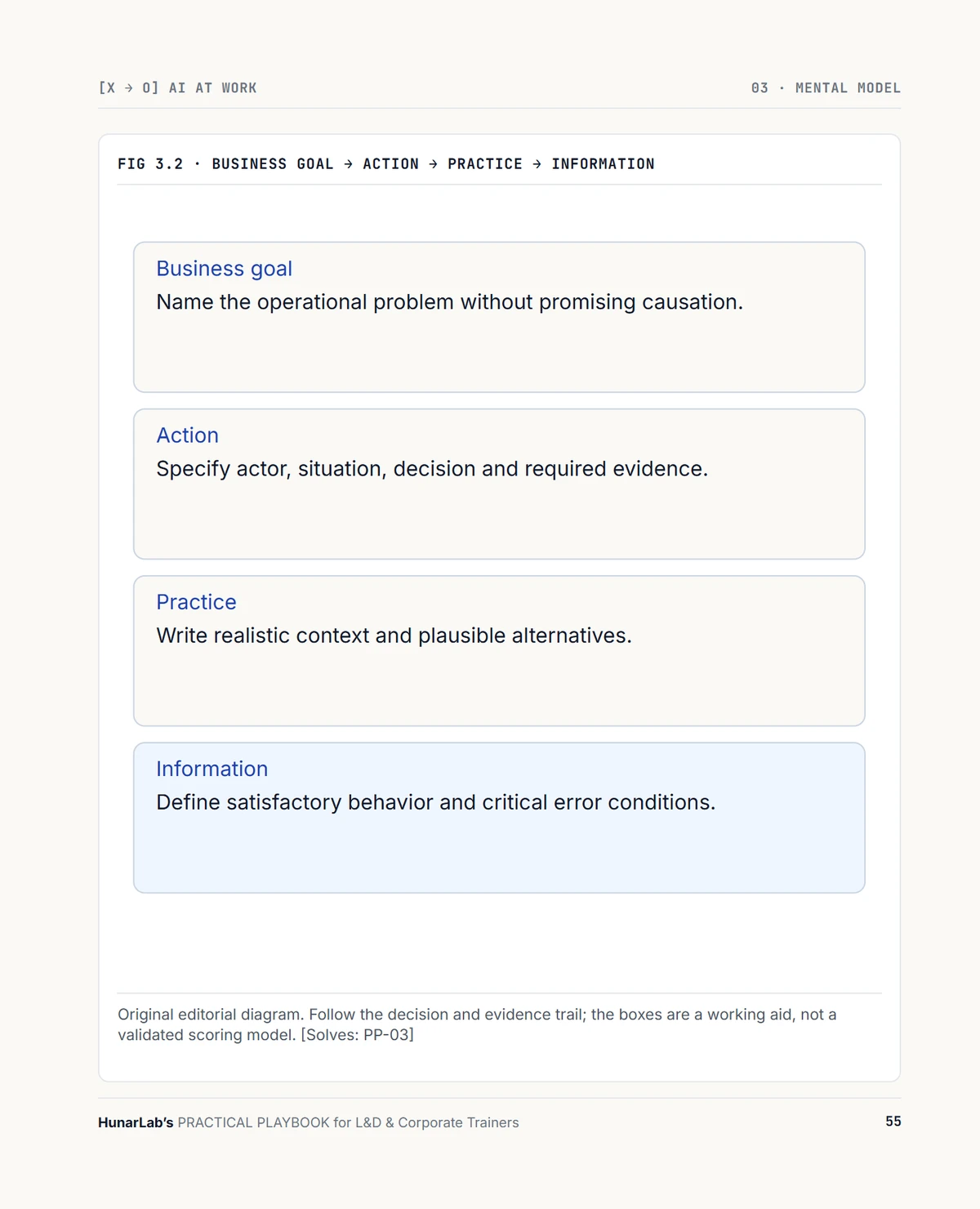
Eight actual draft previews from this book’s master-page exports: front and back covers, contents, and selected working pages. Select an image for a larger view. Final contents and release approval remain pending.
THE PLANNED RELEASE
What You Get When It Is Released
- The Illustrated Book (200 Pages)
Nine self-contained chapters structured on a visual 10-spread rhythm. Each chapter pairs a mental model with a step-by-step play, annotated good-vs.-poor work examples, stakeholder pushback scripts, and an anti-patterns guide.
- Nine Fill-In Field Toolkits
Printable PDF and editable digital canvases unlocked through hunarlab.com after book purchase verification.
- AI Workflows With Mandatory Human Checks
Nine copy-paste prompts planned for testing on messy training intake requests, scenario drafting, roleplay simulations, and catalog audits, paired with explicit Subject Matter Expert (SME) and compliance verification steps to check for generic content and inaccurate policy guidance. Completed testing is not claimed here.
INSIDE BOOK 06
The Nine Plays
Chapter lineup from the current 21 November 2026 book draft, selected for this page by the founder. Each play pairs a practical work decision with a fill-in field toolkit.
The manuscript remains a draft; buyer validation, independent review and release approval are pending.
- Chapter 01
Turn Requests Into Performance Problems
Field ToolkitTraining Request Intake Card
Diagnose the performance problem behind a training request and separate a learning need from process, tool or access barriers.
- Chapter 02
Get What You Need From SMEs
Field ToolkitSME Agreement & Review Log
Agree what subject matter experts must contribute, who reviews the work and how unresolved questions will be handled.
- Chapter 03
Design Practice, Not Slides
Field ToolkitAction Map & Practice Builder
Start from observable workplace actions and build realistic practice with inspectable feedback criteria.
- Chapter 04
Design for the 10-Minute Window
Field ToolkitFormat Chooser & Microlesson Spec
Choose a format and a focused microlesson that fit the learner’s work context and time constraints.
- Chapter 05
Run Live and Virtual Sessions People Join
Field ToolkitSession Run Sheet
Plan live or virtual sessions around participation, useful practice and clear facilitator decisions.
- Chapter 06
Make It Stick After the Session
Field ToolkitTransfer Plan & Manager Kit
Make first use, manager support and follow-up evidence explicit so the learning has a route back into daily work.
- Chapter 07
Show Impact Leaders Believe
Field ToolkitImpact Plan & One-Page Results Report
Plan impact evidence before delivery and report behavior, results and limitations without unsupported causal claims.
- Chapter 08
Use AI Without Losing Quality or Trust
Field ToolkitAI Use Policy-on-a-Page & Review Checklist
Set boundaries for AI use and require human review of accuracy, confidentiality and source evidence before sharing material.
- Chapter 09
Do More With Less — and Say Why
Field ToolkitL&D Capacity & Priority Board
Make team capacity, priorities and trade-offs visible so the learning team can explain what it will deliver or defer.
WHO IT IS FOR
Learning, training and enablement leads.
- Small-team corporate L&D practitioners deciding which performance problems need learning support.
- Corporate trainers and instructional designers building realistic practice with clear SME review.
- Learning and enablement leads responsible for transfer, credible evidence and limited team capacity.
Testing Status & Honest Limits
Planned testing
Release checks are planned around performance requests, SME review, practice design, format selection, facilitation, learning transfer, impact evidence, AI-use checks and capacity trade-offs. Current draft material and local checks do not establish independently approved tool compatibility or outcome claims. Results and known limitations will be reported before release.
Timeboxes, percentages and review intervals in the planned plays are working design choices to adapt to context, rather than universal effectiveness standards.
What This Book Is Not
This is not a software tutorial for Articulate Storyline, Captivate, or specific LMS platforms, nor an academic educational-theory textbook. It focuses on practical performance diagnosis, workflow-embedded enablement, active facilitation, and measurable transfer.
SERIES ROADMAP
Explore the Series
Wave 1 · Books 01–12 · Target December 2026. All titles remain forthcoming.
Product & Design
AI & Analytics
Delivery & Leadership
Digital Business
Frequently Asked Questions
How does this playbook distinguish a training need from a performance problem?
The planned Training Request Intake Card helps clarify the behavior, evidence, and conditions behind a request before building a course. A missing skill may call for practice; unclear expectations, incentives, or workflow barriers may require another response.
Can I use these learning workflows with any LMS or classroom format?
The planned methods are platform independent and cover live, virtual, and in-flow learning decisions. Final editable-file formats and supported applications will be confirmed before release; no particular LMS integration is promised.
How can L&D teams use AI without publishing inaccurate learning content?
Use AI for a bounded draft, then have an appropriate subject-matter expert check facts, examples, and realistic performance requirements. The planned review logs make those checks explicit rather than treating generated content as approved instruction.
Requirements & Compatibility
Final delivery formats, required apps, supported versions, accessibility details and any AI-tool requirements will be confirmed before release. Companion access instructions and any account or purchase-verification requirements will be stated with the released files.
Price, license, refund terms and support arrangements will be published before checkout is enabled. Purchases and downloads are not available yet.
HunarLab · Page content reviewed